How Major Sporting Events Change Traveler Behavior: What Every Hotel Should Know
Summary
When a global event such as the FIFA World Cup, the Olympic Games, or Formula 1 approaches, hotel prices aren't the only thing that changes—traveler behavior changes as well.
The way guests search for hotels, compare properties, decide when to book, and choose where to stay becomes completely different from a typical leisure trip.
A family planning a summer vacation has different priorities from a football fan traveling to attend an international tournament. Their booking timeline, budget, expectations, and decision-making process all change.
This is why understanding traveler behavior has become one of the most valuable competitive advantages for hotels.
Properties that understand how guests think, when they book, and what influences their decisions can build stronger marketing strategies, optimize pricing, increase direct bookings, and improve guest satisfaction.
During major sporting events, hotels aren't simply competing with neighboring properties—they're competing for travelers' attention from the very first moment they begin planning their trip.
In this guide, we'll explore how major sporting events reshape traveler behavior and how hotels can turn these behavioral changes into higher occupancy, stronger revenue, and long-term growth.
Why Traveler Behavior Changes During Major Sporting Events
During a typical travel season, guests usually have considerable flexibility regarding their travel dates, destination, and length of stay.
Major sporting events completely change this pattern.
Instead of planning a vacation around personal convenience, travelers organize their entire trip around fixed match schedules and tournament dates.
Football fans often have limited flexibility. They need accommodation that matches kickoff times, transportation options, and stadium locations.
Many also travel in groups of friends or family members, making room availability even more important.
As a result, booking behavior during international tournaments differs significantly from normal travel periods.
Travelers Book Much Earlier
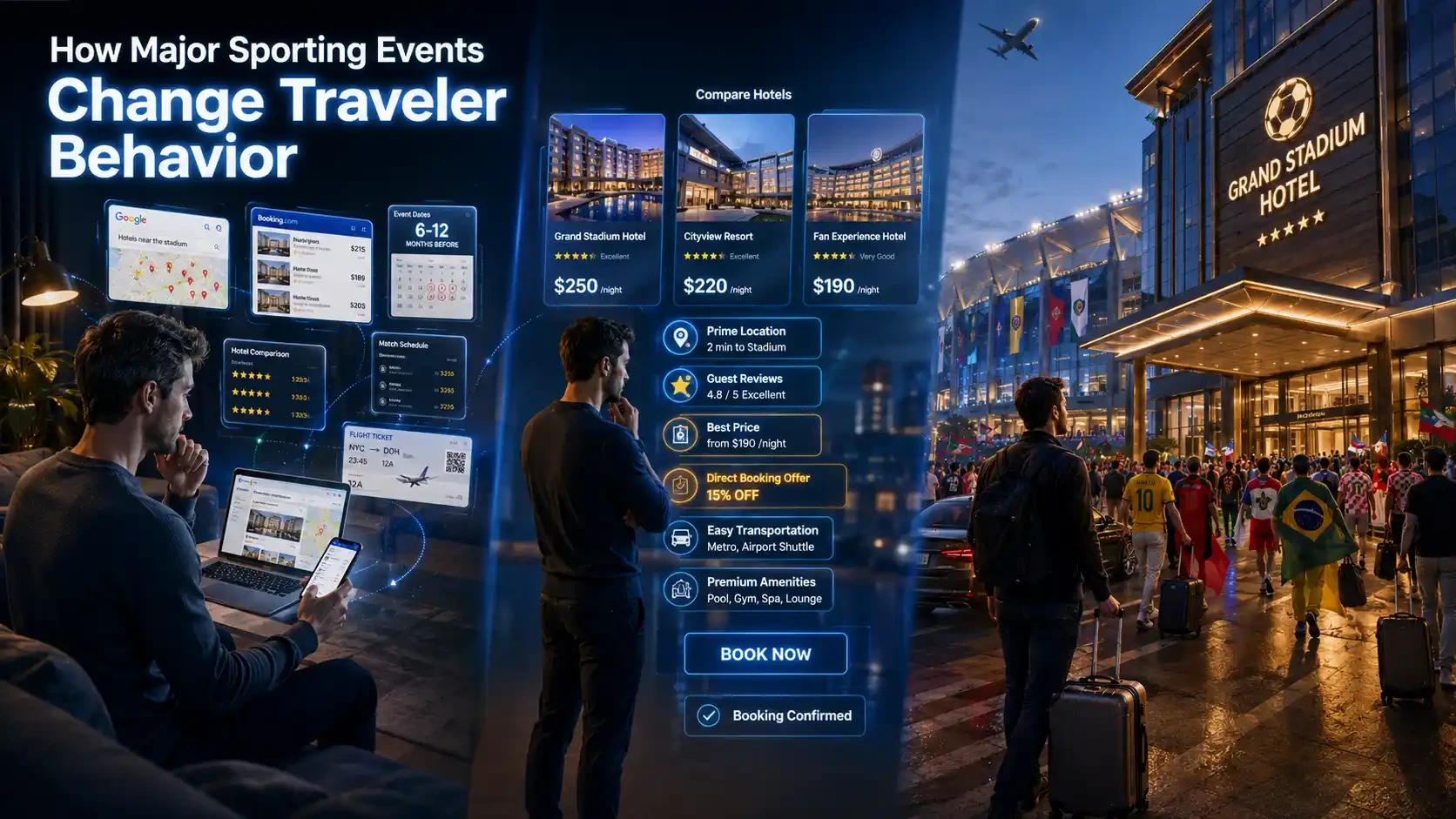
One of the most noticeable changes during major sporting events is the booking window.
While many leisure travelers reserve hotels only a few weeks before arrival, sports fans often secure their accommodation 6 to 12 months before the tournament begins.
There are several reasons behind this early planning:
- To secure accommodation near stadiums.
- To benefit from lower room rates before prices increase.
- To coordinate flights with match schedules.
- To reserve airline tickets before demand peaks.
- To ensure enough rooms are available for groups traveling together.
For hotels, this extended booking window creates an excellent opportunity to establish a strong reservation base early while forecasting demand more accurately.
Location Becomes More Important Than Luxury
Under normal circumstances, many travelers are willing to stay farther from the city center if the hotel offers more luxury.
Major sporting events change those priorities.
For many guests, convenience becomes more valuable than luxury.
Hotels located close to:
- Stadiums.
- Metro stations.
- Train stations.
- Public transportation.
- Fan Zones.
- Restaurants and entertainment districts.
often become more attractive than luxury properties located farther away.
A well-located three-star hotel may outperform a five-star luxury hotel simply because guests can reach the stadium more easily.
For this reason, hotels should clearly highlight their location, nearby transportation, and walking distances across booking platforms and their official website.
These details frequently influence booking decisions more than additional luxury amenities.
Guest Reviews Become Even More Important
As travel costs increase, guests naturally become more cautious about where they stay.
Many international travelers are visiting the destination for the first time, making online reviews one of their most trusted decision-making tools.
Guests aren't simply booking a room—they're purchasing confidence.
Reviews often influence decisions based on factors such as:
- Check-in efficiency.
- Cleanliness.
- Customer service.
- Wi-Fi quality.
- Accuracy of hotel descriptions.
- Accessibility to transportation.
Because of this, online reputation management becomes just as important as paid marketing campaigns during major sporting events.
Hotels that consistently maintain positive guest reviews gain a significant competitive advantage.
Travelers Compare More Hotels Before Booking
Today's travelers rarely book the first hotel they find.
Instead, they compare multiple properties before making a final decision.
Their comparisons typically include:
- Room rates.
- Location.
- Guest ratings.
- Photos.
- Amenities.
- Cancellation policies.
- Payment options.
Most travelers also compare hotels across multiple platforms, including Google, Booking.com, Expedia, Agoda, and hotel websites before confirming a reservation.
This means hotels aren't competing only with nearby competitors—they're competing against hundreds of properties appearing in search results.
Professional photography, compelling descriptions, updated pricing, and complete property information all play a major role in improving conversion rates and increasing reservations.
Travelers Become More Willing to Pay for Value
It's true that hotel prices often increase during major sporting events due to higher demand. However, an interesting shift also occurs in traveler behavior—many guests become more willing to pay higher rates if they believe they're receiving greater value.
Guests traveling to attend a global sporting event aren't always searching for the cheapest accommodation. Instead, they're looking for convenience, reliability, and a stress-free experience.
Many travelers are willing to pay more for benefits such as:
- A hotel close to the stadium.
- Easy access to public transportation.
- Flexible cancellation policies.
- Fast and efficient check-in.
- Airport shuttle services.
- Early breakfast on match days.
- 24-hour guest support.
This highlights an important lesson for hotels: during major sporting events, value often becomes a stronger selling point than price alone.
Guests Tend to Stay Longer
Unlike traditional leisure travelers, many sports fans extend their trips beyond a single match.
Some attend multiple games, while others combine the tournament with sightseeing or additional vacations before returning home.
As a result, hotels frequently experience an increase in Average Length of Stay (ALOS) during major sporting events.
Longer stays benefit hotels because they increase total guest spending while reducing the cost of acquiring new customers.
Hotels can encourage extended stays by offering:
- Discounts for additional nights.
- Attraction and sightseeing packages.
- Family travel offers.
- Complimentary airport transfers for longer stays.
- Special tournament packages.
Every extra night represents additional revenue without requiring another reservation.
Mobile Bookings Continue to Grow
Major sporting events also accelerate mobile booking behavior.
Many travelers search for hotels using their smartphones before departure, during their journey, or even after arriving at the destination.
Plans often change unexpectedly.
A team may qualify for another round.
Flights may be rescheduled.
Guests may decide to extend their stay after purchasing additional match tickets.
Because of this, a hotel's mobile booking experience has become essential.
A slow website, confusing booking process, or poor mobile design can cause potential guests to leave within seconds and book with a competitor instead.
Hotels should ensure that important information is always easy to find on mobile devices, including:
- Room availability.
- Pricing.
- Hotel photos.
- Contact information.
- Property location.
- Direct booking options.
How Hotels Can Adapt to Changing Traveler Behavior
Tip
Understanding traveler behavior is valuable only when hotels use those insights to improve their marketing and revenue strategies.
Several practical actions can make a significant difference.
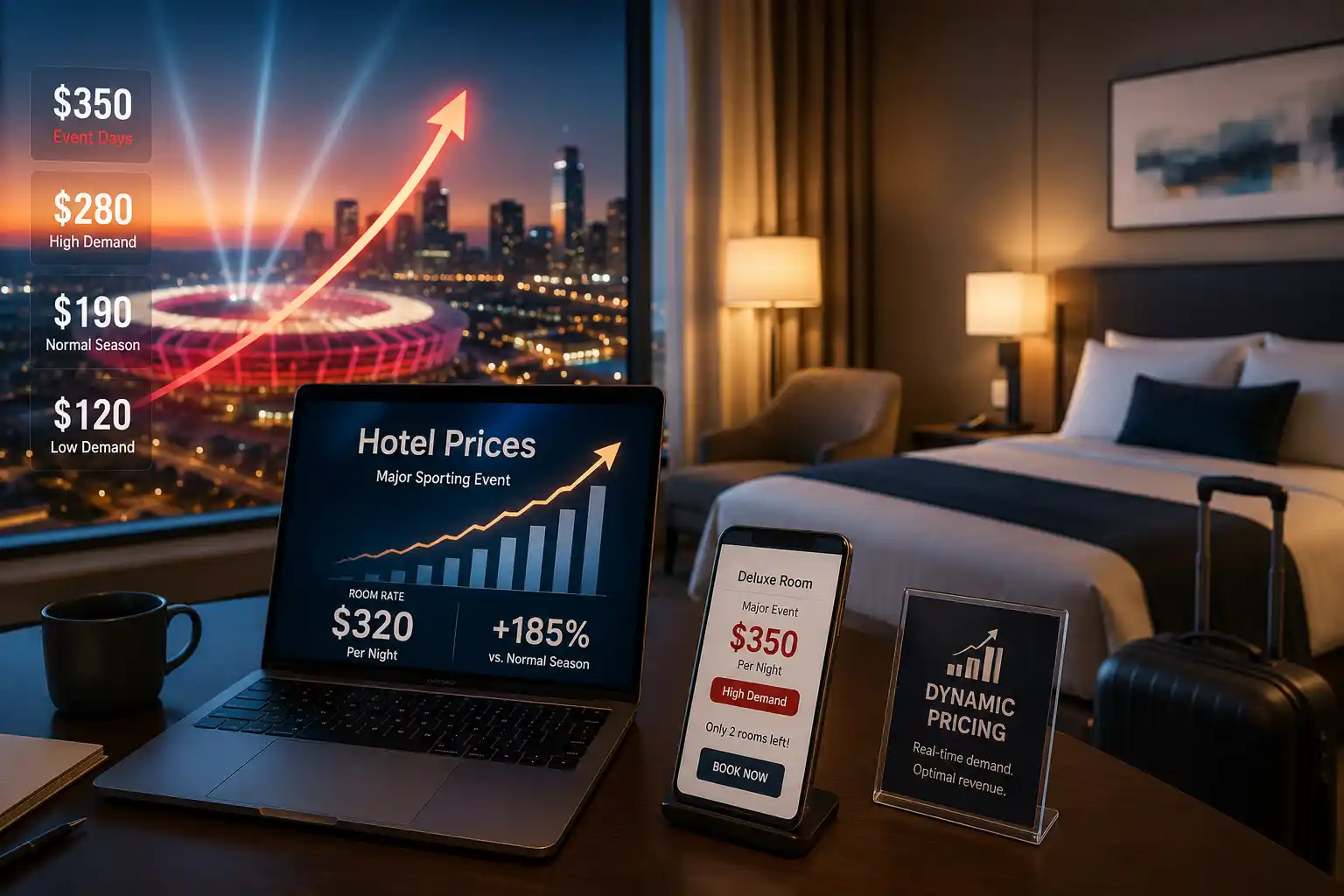
Update Room Rates Regularly
Pricing should respond to changes in demand, booking pace, and market conditions rather than remain fixed.
Hotels that continuously optimize their pricing are more likely to maximize both occupancy and revenue.
Optimize OTA Listings
A hotel's listing on Online Travel Agencies is often its first impression.
Professional photography, accurate descriptions, updated amenities, and competitive pricing all influence booking decisions.
Keeping OTA listings current improves visibility and conversion rates.
Improve the Hotel Website
A hotel's website should function as a powerful sales channel rather than simply providing information.
Fast loading speeds, mobile-friendly design, and a simple booking engine all help increase direct reservations.
Hotels should also promote exclusive benefits for guests who book directly through the official website.
Manage Guest Reviews
Online reviews are a critical part of the booking journey.
Hotels should actively monitor guest feedback, respond professionally to reviews, and use guest comments to improve service quality.
A strong online reputation often influences booking decisions more than advertising alone.
Create Event-Specific Packages
Rather than selling only accommodation, hotels can increase perceived value by offering packages designed specifically for tournament travelers.
Examples include:
- Bed and breakfast packages.
- Stadium transportation.
- Late check-out.
- Restaurant discounts.
- Family and group offers.
These packages help hotels compete through value instead of relying solely on lower prices.
Common Mistakes Hotels Make
Although traveler behavior changes dramatically during major sporting events, many hotels continue using traditional marketing strategies.
Some of the most common mistakes include:
- Focusing only on increasing room rates.
- Ignoring the direct booking experience.
- Using outdated or low-quality photos.
- Failing to update hotel information.
- Neglecting guest reviews.
- Depending entirely on Online Travel Agencies.
- Not understanding travelers' changing expectations.
These mistakes often result in lost bookings that could have been secured through better preparation.
💡 A Tip from Target Hotel Marketing Experts
Successful hotels don't simply monitor market demand—they study the people creating that demand.
The more you understand how travelers search, compare hotels, evaluate value, and make booking decisions, the easier it becomes to create marketing strategies that attract the right guests at the right time.
Remember, guests traveling to major sporting events aren't just booking a hotel room.
They're looking for convenience, confidence, flexibility, and a seamless travel experience.
Hotels that deliver those expectations consistently will outperform competitors long after the tournament has ended.
Conclusion
Warning
Major sporting events reshape traveler behavior in ways that extend far beyond higher hotel demand.
Guests begin planning earlier, compare more properties, rely heavily on reviews, prioritize convenient locations, and become more willing to pay for value rather than simply searching for the lowest price.
Hotels that understand these behavioral changes can build smarter pricing strategies, improve their marketing efforts, increase direct bookings, and create better guest experiences.
Ultimately, the hotels that succeed during global sporting events aren't always those with the best location—they're the ones that understand their guests better than anyone else.
Frequently Asked Questions
Why do travelers book hotels so early for major sporting events?
Many sports fans reserve accommodations 6 to 12 months before major tournaments to secure the best locations, benefit from lower prices, and coordinate their travel plans with match schedules.
Is price the most important factor during major sporting events?
Not always. While pricing remains important, many travelers place greater value on location, convenience, guest reviews, transportation access, and overall experience.
Does hotel location become more important during sporting events?
Yes. Hotels located near stadiums, public transportation, or Fan Zones often attract more bookings than properties offering luxury but located farther away.
How can hotels adapt to changing traveler behavior?
Hotels should optimize pricing, improve their websites, strengthen direct booking strategies, maintain accurate OTA listings, monitor guest reviews, and create packages designed specifically for event travelers.
What is the biggest factor influencing hotel bookings during major sporting events?
There isn't a single factor. Hotels achieve the best results by combining competitive pricing, strong online visibility, excellent guest reviews, convenient locations, and an outstanding booking experience.