Do Hotels Make Exceptional Profits During Major Sporting Events? What Every Hotel Owner Should Know
Summary
When a city hosts a global sporting event such as the FIFA World Cup, the Olympic Games, or Formula 1 races, many hotel owners assume that higher demand automatically guarantees exceptional profits.
At first glance, this assumption seems reasonable. As thousands—or even millions—of visitors arrive, occupancy rates increase, room prices rise, and hotels often sell out months before the event begins.
However, the reality is far more complex.
A fully booked hotel doesn't necessarily generate exceptional profits. In fact, a hotel operating at 100% occupancy may earn less than another property with lower occupancy but a stronger pricing strategy and better distribution management.
During major sporting events, success depends on much more than demand. Hotels must effectively manage revenue, implement dynamic pricing strategies, maximize the value of every reservation, and deliver an outstanding guest experience that encourages future direct bookings.
In this guide, we'll explore why some hotels achieve exceptional financial results during international sporting events while others finish the same season with profits that fall well below expectations.
Why Do Hotel Revenues Increase During Major Sporting Events?
International sporting events are among the strongest demand drivers in the hospitality industry. They attract travelers from around the world, increasing travel for match attendance, business, media coverage, sponsorship activities, and tourism related to the event.
As a result, hotels typically experience significant revenue growth during these periods. However, this increase isn't driven by a single factor—it's the result of several key performance indicators improving simultaneously.
Tip
Higher Occupancy Rates
The most immediate and visible impact of major sporting events is the increase in hotel occupancy.
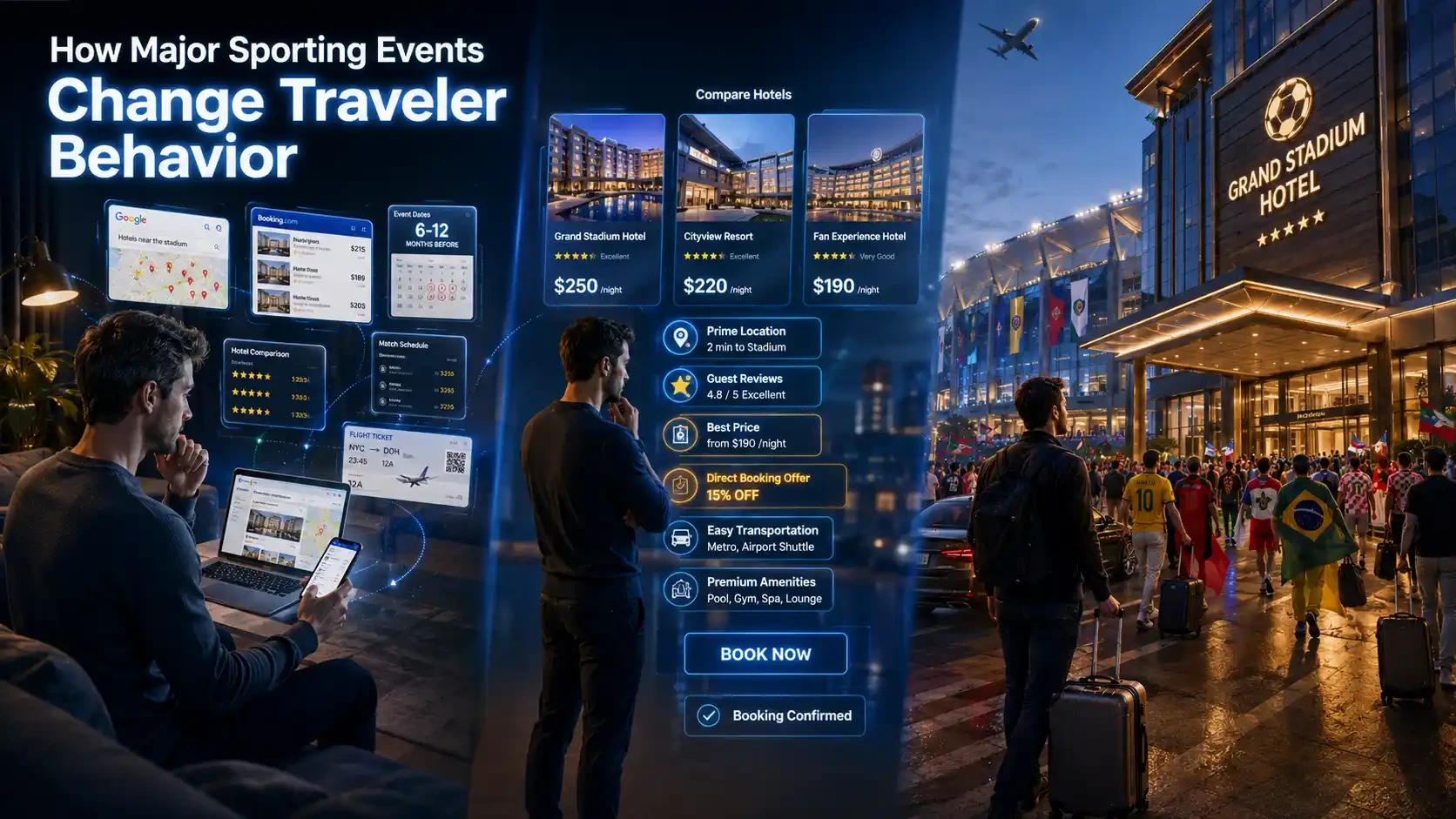
Once match schedules are released and ticket sales begin, thousands of fans start searching for accommodation. Booking trends from international tournaments consistently show that many travelers confirm their reservations 6 to 12 months before the event.
Hotels that prepare early are far more likely to achieve high occupancy levels without relying on last-minute discounts.

Higher Average Daily Rate (ADR)
Hotels don't just sell more rooms during major tournaments—they also have the opportunity to increase their Average Daily Rate (ADR).
As demand naturally rises, hotels can gradually adjust room prices while remaining competitive within their market.
However, this only works when pricing decisions are based on dynamic pricing strategies, rather than arbitrary price increases.

Stronger RevPAR Performance
One of the most important metrics used by revenue managers is RevPAR (Revenue Per Available Room) because it combines occupancy and ADR into a single indicator that reflects a hotel's true financial performance.
During major sporting events, RevPAR can improve dramatically when hotels successfully balance higher room rates with strong occupancy levels.
This is why focusing solely on occupancy never provides a complete picture of profitability.
Longer Average Length of Stay
Unlike traditional peak seasons, many sports fans don't travel to attend just one match.
Instead, they often combine multiple games with a leisure vacation, resulting in a longer average length of stay.
Every additional night represents extra revenue without the cost of acquiring a new customer.
Increased Ancillary Revenue
Hotel profits don't come exclusively from room sales.
As guest numbers grow, opportunities for additional revenue also increase through services such as:
- Restaurants and cafés
- Laundry services
- Parking facilities
- Airport transportation
- Room upgrades
- Late check-out
- Spa and wellness services, where available
Professional hotels view major sporting events as opportunities to maximize total guest revenue, not simply room revenue.
Does High Occupancy Automatically Mean Higher Profits?
Warning
The short answer is: Not always.
This is one of the most misunderstood concepts in the hospitality industry.
A hotel may operate at full occupancy throughout a tournament and still generate lower profits than another hotel with fewer occupied rooms.
How is that possible?
Because profitability depends not only on revenue but also on the relationship between revenue and operating costs.
During major sporting events, hotels often experience higher expenses, including:
- Additional temporary staff
- Overtime labor costs
- Increased electricity and water consumption
- Higher housekeeping and operational expenses
- Larger OTA commission payments
- Increased marketing and advertising costs
If these costs aren't carefully managed alongside revenue growth, the final profit margin may be far lower than expected.
That's why experienced revenue managers measure success based on profit margin, not occupancy alone.
Why Do Some Hotels Fail to Maximize Major Sporting Events?
Even when demand is exceptionally high, some hotels fail to achieve the financial results they expected.
In most cases, the problem isn't the market—it's the decisions made before the tournament began.
Ineffective Pricing Strategy
One of the most common mistakes is dramatically increasing room prices immediately after a major tournament is announced.
This often discourages early bookings and pushes travelers toward more competitively priced alternatives.
On the other hand, waiting too long to adjust prices can prevent hotels from maximizing revenue from early demand.
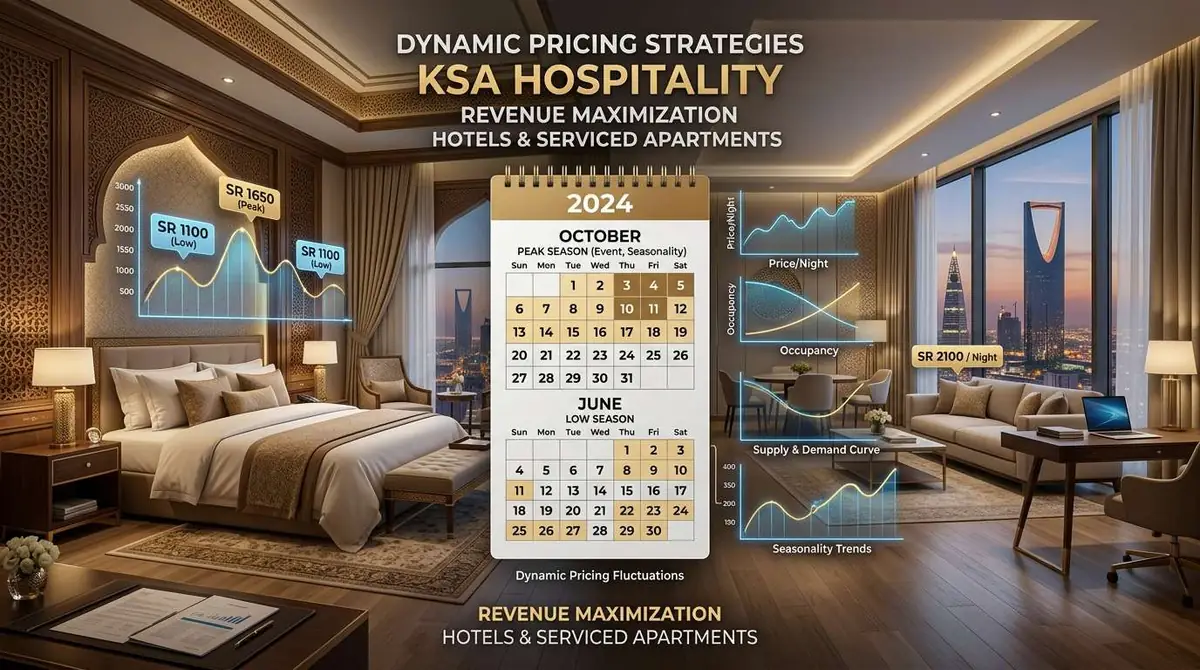
The most effective approach is to implement dynamic pricing, where room rates continuously adapt based on booking pace, market demand, and competitor pricing.
Overreliance on OTAs
Online Travel Agencies provide access to millions of travelers, but they aren't always the most profitable booking channel.
When the majority of reservations come through OTAs, commission costs increase significantly, reducing overall profitability.
For this reason, successful hotels strive to maintain a healthy balance between direct bookings and reservations generated through third-party booking platforms.
A Poor Hotel Website
Even when travelers decide to book directly, they may abandon the process if the hotel's website is slow, confusing, or difficult to use on mobile devices.
Today, a hotel website is no longer just an information page—it's a core part of the property's sales strategy.
Providing a fast, seamless direct booking experience helps reduce reliance on intermediaries while increasing profit margins.
Lack of Early Preparation
Some hotel owners believe they have plenty of time to prepare after a tournament is announced. In reality, the opposite is true.
For major international events, many travelers book their accommodations 6 to 12 months before the tournament begins. Hotels that prepare early gain a significant advantage by capturing early bookings and implementing more effective pricing strategies.
Hotels that wait until the final weeks to update room rates or optimize their OTA listings often lose a substantial number of potential guests who have already made their travel decisions.

Tip
Staff Shortages and Operational Readiness
Higher demand doesn't just mean more guests—it also puts greater pressure on every department within the hotel.
Without sufficient staff in reception, housekeeping, or guest services, the guest experience begins to decline, even when every room is occupied.
Long waiting times, delayed room preparation, and slow responses to guest requests can quickly lead to poor online reviews, affecting the hotel's reputation long after the tournament has ended.
For this reason, operational readiness is a critical component of profitability—not simply an operational responsibility.
What Sets the Most Profitable Hotels Apart?
Although hotels compete in the same market, their financial results can vary dramatically.
The difference is that the most successful properties don't rely solely on increased demand—they follow a well-defined strategy focused on revenue management and maximizing the value of every reservation.
Summary
Revenue Management
Real profitability begins long before guests arrive.
Revenue management involves forecasting demand, monitoring booking pace, analyzing competitor pricing, and making strategic decisions that ensure each room is sold at the right price and at the right time.
This data-driven approach enables hotels to maximize revenue from every available room instead of relying on guesswork or last-minute decisions.
Dynamic Pricing
Setting one fixed room rate is no longer an effective strategy during major sporting events.
As demand changes continuously, prices should also adapt based on factors such as:
- Booking pace
- Remaining room inventory
- Competitor pricing
- Match schedules
- Expected market demand
Dynamic pricing allows hotels to maximize revenue without overpricing rooms or losing valuable early bookings.
Increasing Direct Bookings
Although OTAs remain an essential distribution channel, direct bookings are often significantly more profitable because they eliminate third-party commission fees.
Successful hotels encourage guests to book through their official website by offering exclusive benefits such as:
- Early check-in
- Restaurant or service discounts
- Complimentary room upgrades (subject to availability)
- Exclusive offers unavailable on OTA platforms
The higher the percentage of direct bookings, the greater the hotel's profit margin.
Increasing Guest Spending (Upselling & Cross-selling)
Revenue opportunities don't end once a room has been booked.
Professional hotels maximize every stage of the guest journey by offering additional services such as:
- Room upgrades
- Breakfast packages
- Airport transportation
- Romantic or family packages
- Late check-out
- Spa treatments and recreational activities
These additional sales can generate substantial revenue without increasing the total number of reservations.
Managing Your Online Reputation
During international sporting events, many travelers rely heavily on guest reviews before choosing where to stay.
Successful hotels actively monitor online reviews, respond professionally, and address guest concerns before they damage the property's reputation.
Positive reviews don't just increase bookings during the tournament—they continue attracting new guests long after the event has ended.
Improving Your Google Visibility
Many travelers begin their accommodation search on Google rather than directly on booking platforms.
Optimizing your hotel's presence in search results, maintaining an up-to-date Google Business Profile, and improving your website can significantly increase direct bookings while reducing dependence on third-party intermediaries.
Warning
Common Mistakes Hotels Make During Major Sporting Events
Even when demand is strong, poor decisions can significantly reduce profitability. Common mistakes include:
- Raising room prices excessively without analyzing the market
- Ignoring competitor pricing
- Depending entirely on OTAs
- Disabling or failing to promote direct bookings
- Neglecting hotel photos and booking page content
- Understaffing during peak demand
- Ignoring guest reviews and failing to respond professionally
- Operating without a clear revenue management strategy
In many cases, these mistakes prevent hotels from turning exceptional demand into exceptional profits.
💡 Expert Tip from Target Hotel Marketing
Tip
Many hotel owners believe exceptional profits begin when every room is sold.
In reality, the most successful hotels don't achieve outstanding results simply because demand is high—they succeed because they are fully prepared to manage that demand strategically.
Start planning well before the tournament begins. Monitor KPIs such as ADR and RevPAR, implement dynamic pricing, and invest in growing direct bookings alongside your OTA strategy.
Always remember that a fully occupied room doesn't necessarily generate the highest profit. The room sold at the right price, through the right booking channel, while delivering an exceptional guest experience, creates the greatest long-term value for your hotel.
Conclusion
Summary
Major sporting events create extraordinary opportunities for hotels to increase revenue, but they don't automatically guarantee exceptional profits.
The real difference between hotels that achieve outstanding results and those that simply experience higher occupancy lies in strategic planning, revenue management, pricing flexibility, operational efficiency, and the ability to maximize the value of every guest.
As competition for travelers continues to grow, investing in the guest experience, increasing direct bookings, and building a strong digital presence become essential—not only during the tournament, but long after it ends.
Frequently Asked Questions
Do all hotels earn higher profits during major sporting events?
Not necessarily. Higher demand certainly increases revenue potential, but profitability also depends on cost control, pricing strategy, booking channel mix, and operational efficiency.
Should hotels increase room rates during major sporting events?
Rather than raising prices arbitrarily, hotels should implement a dynamic pricing strategy that reflects market demand, booking pace, and competitor pricing.
When should hotels begin preparing for major sporting events?
Ideally, preparations should begin as soon as the tournament or match schedule is announced. Many travelers confirm their reservations 6 to 12 months before the event.
Are direct bookings better than OTA bookings?
Direct bookings are generally more profitable because they eliminate commission fees. However, the best results come from maintaining a balanced distribution strategy that combines direct bookings with OTA channels.
How can hotels maximize profits during major sporting events?
By combining effective revenue management, dynamic pricing, direct booking strategies, an outstanding guest experience, and additional revenue opportunities such as room upgrades and ancillary services.