Booking.com vs Expedia vs Agoda: Choosing the Right OTA for Saudi Hotels
Saudi Arabia's hospitality sector is undergoing a historic transformation. With Vision 2030 driving record tourism inflows, hotel owners and revenue managers face a critical question: which OTA channels deliver the best return on distribution spend? The answer isn't one-size-fits-all. Booking.com vs Expedia vs Agoda each bring distinct strengths to the Saudi market—from global brand recognition and mobile-first booking flows to localized payment options like Mada, STC Pay, and Apple Pay that cater to domestic travelers.
Choosing the right platform goes beyond surface-level comparisons. Hotel owners must evaluate OTA commission rates against actual booking quality, assess how each channel integrates with their hotel revenue management OTA strategy, and account for evolving regulatory frameworks around data privacy and contract terms set by Saudi authorities. The way hotels handle multi-currency settlements and local payment reconciliation can directly impact net revenue.
For properties managing distribution across multiple channels, a robust channel management strategy is no longer optional—it's essential. This guide breaks down the Saudi Arabia OTA comparison in practical terms, giving hotel owners, general managers, and revenue managers the data-driven clarity needed to optimize their hotel distribution Saudi Arabia strategy and maximize profitability.
Market Overview of OTAs in Saudi Arabia
Understanding the OTA landscape in Saudi Arabia is essential for hotel owners and revenue managers who want to maximize visibility while balancing commission costs and guest expectations. The market is being reshaped by rapid mobile adoption, a surge in direct bookings, and the kingdom's aggressive tourism push under Saudi Vision 2030. Today, OTAs still dominate the booking funnel, but local nuances—such as Mada and STC Pay payment integrations and tightening data-privacy rules—are forcing a recalibration of how channels are managed.
Local payment integration is now a key differentiator. Saudi guests increasingly expect seamless checkout via Mada cards and popular local wallets, and OTAs that support these methods see higher conversion rates. Currency handling also matters; most OTAs price in USD, but savvy hoteliers are layering SAR-based options to reduce friction for domestic travelers.
Regulatory shifts around data privacy are also reshaping OTA contracts. Saudi Arabia's Personal Data Protection Law (PDPL) requires explicit consent for data sharing, prompting OTAs to revise their terms and giving hotel owners leverage to negotiate stricter privacy clauses. This impacts guest trust, especially on platforms like Booking.com, Expedia, and Agoda, where reputation hinges on transparent data practices.
The dominance of the three major players is evident:
| Platform | Market Share (approx.) | Typical Commission* |
|---|---|---|
| Booking.com | 45‑55% | 12‑18% |
| Expedia | 20‑30% | 15‑20% |
| Agoda | 10‑15% | 10‑14% |
*Rates vary by hotel category and promotional agreements.
While these giants provide broad reach, channel‑management tools are becoming critical for a multi‑OTA strategy. Automated rate parity, inventory syncing, and localized content ensure that Saudi hotels can capitalize on OTA traffic without sacrificing direct‑booking channels.
Best practice: Integrate a robust channel manager that supports Mada/STC Pay and SAR pricing, and regularly audit OTA contracts for data‑privacy compliance.
Common mistake: Assuming a one‑size‑fits‑all commission structure across all OTAs. Local market dynamics often justify negotiated rates, especially for high‑performing properties.
Commission & Fee Structures
Managing distribution across multiple online travel agencies (OTAs) feels like walking a tightrope for hotel owners in Saudi Arabia. While Booking.com, Expedia, and Agoda help hotels reach global audiences, their commission structures directly affect bottom-line margins. Understanding these models—and how they interact with local market demands, regulatory frameworks, and Saudi Arabia's Vision 2030 goals—is critical for revenue managers aiming to maximize profitability while balancing exposure.
Booking.com's Premium Commissions: A High-Visibility Trade-Off
Booking.com typically charges 15-25% in commissions, with luxury properties often paying higher rates. For Saudi hotels targeting affluent travelers or high-end properties, this premium pricing makes sense—Booking.com dominates the luxury segment globally and offers unparalleled reach. However, the fee structure can skew toward OTAs dominating booking volumes. For example, a five-star hotel in Riyadh might prioritize Booking.com's exposure despite the 25% cut, but budget hotels risk margin erosion if they rely too heavily on these commissions.
Practical Tip: Use Booking.com's visibility but pair it with aggressive direct booking incentives, like the direct booking discounts outlined in

, to offset OTA reliance.
Tip
Expedia's Lower Rates, Higher Demands
Expedia offers competitive 8-15% commission rates, but its model attaches a catch: hotels must invest heavily in marketing to secure placements. This approach favors chain hotels or brands with existing brand equity. A boutique hotel in Jeddah, for instance, might struggle to gain traction on Expedia without supplemental advertising—a costly hurdle in Saudi Arabia's evolving tourism landscape.
Best Practice: Expedia's volume-based discounts work well for larger properties with consistent booking pipelines. Smaller hotels should focus on its niche offerings (e.g., family tours) rather than competing on price discovery.
Warning
Agoda's Volume-Driven Model: Balancing Cost and Flexibility
Agoda sits at 10-18% commission, making it a middle ground between Booking.com and Expedia. Its volume-based discounts appeal to Saudi hotels with fluctuating occupancy rates, especially during events like the Hajj or FIFA World Cup 2026 . For example, a mid-sized hotel in Dammam could leverage Agoda's tiered pricing to scale promotions without overpaying during off-peak periods.

Real-World Example: A serviced apartment complex in Riyadh used Agoda's bulk discount tier during Q1 2024 to promote short-term rentals, boosting occupancy by 18%—
Quote
Example
Local Payment Methods & Currency Considerations
Saudi Arabia's push for localization—mandating support for Saudi Riyal (SAR) payments and local gateways like Mada—adds layers of complexity to OTA partnerships. Agoda, for instance, allows hotels to customize payment flows, reducing chargeback risks. Meanwhile, Booking.com's reliance on international currencies can lead to unfavorable exchange rates, particularly for smaller properties.
Action Step: Audit each OTA's payment infrastructure. Prioritize platforms supporting SAR transactions and localized compliance frameworks, in line with Saudi Data & AI Authority (SDAIA) guidelines under the PDPL.
Navigating Regulatory Shifts
Saudi Arabia's tightening data privacy laws (the Personal Data Protection Law, PDPL) demand meticulous OTA contract management. OTAs operating in the Kingdom must standardize guest data handling to comply—a hurdle for properties operating across dozens of markets. Non-compliance risks fines or account suspensions, underscoring the need for centralized channel management tools that automate compliance.
Info
Channel Management Tools: The Unsung Profit Protector
With each OTA dictating its own terms, manual management becomes unsustainable. Channel management software—like Mews or Hotelbeds—synchronizes rates, availability, and commission tiers across platforms. For instance, a luxury hotel in Jeddah avoided duplicate booking fees during a promotional campaign by automating updates via their channel manager, as detailed in

.
Essential Advice: Tools that auto-apply OTA discounts, flag regulatory conflicts, and track ADR trends are non-negotiable for multi-OTA strategies.

User Experience & Booking Flow
When evaluating OTA platforms like Booking.com, Expedia, and Agoda, hoteliers must consider how each platform's interface and booking process directly impact conversion rates—especially in Saudi Arabia, where cultural nuances and tech adoption shape booking behaviors. A seamless, frictionless experience can mean the difference between a lost guest and a secured reservation, while clunky workflows or outdated payment options risk driving travelers to competitors.
Agoda's Mobile-First Efficiency for Saudi Travelers Agoda has carved out a strong presence in Saudi Arabia by prioritizing mobile optimization. In a market where over 60% of bookings originate from smartphones (a trend amplified by Saudi Vision 2030's push for digital transformation), Agoda's streamlined mobile checkout appeals to guests with impatience for quick decisions. Localized payment methods, such as Mada cards and popular mobile wallets (e.g., STC Pay, PayTab), align with Saudi travelers' preference for fast, cashless transactions. For budget-conscious leisure guests booking short trips or last-minute stays, Agoda's intuitive design—featuring one-tap payment and instant booking confirmations—minimizes drop-offs.
Real-world example: A Riyadh-based boutique hotel saw a 22% increase in bookings after switching its primary distribution channel to Agoda, citing reduced manual payment reconciliation. Best practice: Highlight mobile-friendly features like "book now, pay later" options in marketing copy targeting Gen Z and millennial travelers. Mistake: Neglecting currency auto-conversion for international bookings on Agoda can confuse price-sensitive guests.
Expedia's Group Booking Tools for Corporate Demand Expedia's platform excels in catering to corporate travelers and groups seeking bulk reservations—key segments driving occupancy in Saudi Arabia's booming MICE (Meetings, Incentives, Conferences, Events) sector. The platform's interface allows users to compare group rates across multiple dates, customize room configurations, and split payments among parties. This flexibility resonates with professionals hosting quarterly company retreats or attending industry conferences.
Real-world example: A four-star hotel near Jeddah Airport boosted corporate bookings by 18% by optimizing its Expedia listing with bulk discount rules and loyalty program integration. Best practice: Train revenue managers to adjust Expedia pricing dynamically during major events listed in local calendars (e.g., National Day holidays). Mistake: Over-reliance on Expedia's default rate rules without OTA-specific inventory blocks can lead to room shortages during peaks.
Booking.com's Complexity: A Double-Edged Sword Booking.com's global dominance comes with a caveat: its interface can overwhelm Saudi travelers unfamiliar with multilingual filters or demand forecasts. For price-sensitive leisure guests—such as families planning vacations to destinations like the Red Sea coast—a cluttered layout or lack of localized currency display (e.g., SAR) may result in abandoned bookings. However, hotels leveraging Booking.com's advanced revenue management tools, like its "Genius" dynamic pricing API, can negate this weakness by ensuring competitive parity with OTAs while maintaining direct bookings.
Real-world example: A Jeddah resort reduced OTA dependence to 30% of bookings by using Booking.com's rate parity tools alongside multi-language support for international guests. Best practice: Embed Booking.com's channel manager into workflows to sync inventory in real time, preventing overcommitments. Mistake: Ignoring localized SEO; Arabic-only listing descriptions miss opportunities for high-intent Arabic searches.
Regulatory & Market Alignment: Data Privacy and OTA Fees Saudi Arabia's evolving regulatory landscape, including the Personal Data Protection Law (PDPL), affects how OTAs collect and process guest data. Hotels using Expedia or Booking.com must ensure PDPL-compliant data handling to avoid hefty fines—particularly when transferring personal information to third-party management tools. Additionally, OTA commission rates (typically 15–25%) impact revenue management strategies; platforms like Agoda often undercut competitors with lower margins for bulk promotions, incentivizing hotels to prioritize them during promotional cycles.
Channel Management: The Key to Multi-OTA Success A cohesive OTA strategy hinges on channel management tools that synchronize inventory, pricing, and guest data across platforms. Without centralized control, hotels risk overbooking on Expedia while underselling on Agoda—a scenario exacerbated during high-demand events like the FIFA World Cup 2026. Robust systems, such as Stayntouch or Mews, enable hotels to allocate inventory strategically, suppress bookings on underperforming OTAs, and upsell direct reservations using real-time insights.
Pro tip: Use

to calculate how each OTA's commission affects overall RevPAR, ensuring alignment with Saudi Vision 2030's hospitality targets.
In Saudi Arabia's competitive landscape, partnering with the right OTAs isn't just about platform popularity—it's about matching platform strengths to guest personas and operational goals.
Data & Analytics for Strategic Adjustments
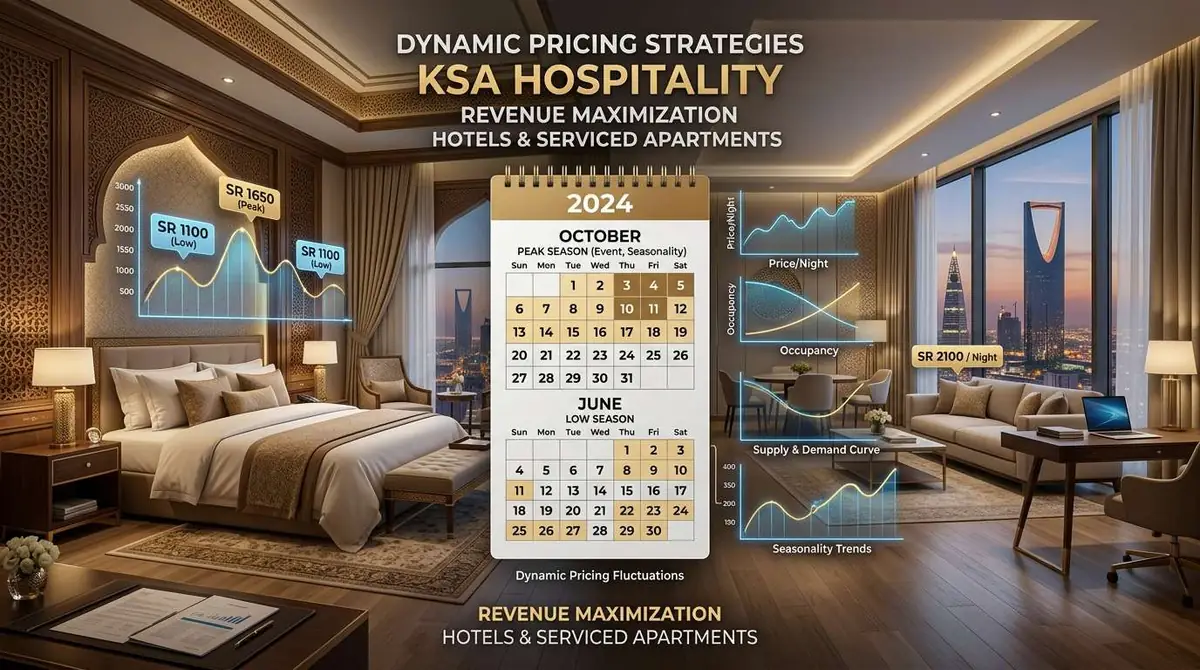
In the fast‑moving Saudi market, hotel owners can no longer rely on gut feeling. Real‑time ADR and RevPAR feeds let you react instantly to price wars, seasonal spikes, and the surge of sports‑related demand sparked by Vision 2030.
- Agoda's granular mobile‑traffic data reveals which cities are seeing the highest last‑minute bookings from domestic travelers, letting you adjust inventory on the fly.
- Expedia's corporate analytics flag event‑driven spikes—think Riyadh Season or the upcoming World Cup—so you can pre‑load corporate contracts and lock in higher rates.
Tip
Practical advice
- Set up daily alerts for price‑parity violations across the three platforms.
- Leverage predictive models that factor in Saudi public holidays and the Vision 2030 tourism roadmap.
- Align inventory rules with local payment gateways; support Mada, Apple Pay, and regional e‑wallets to capture guests who abandon carts when a payment method isn't accepted.
| Metric | Booking.com | Expedia | Agoda |
|---|---|---|---|
| Avg. ADR (Saudi Riyal) | 380 | 350 | 340 |
| RevPAR growth YoY | +12% | +9% | +15% |
| Mobile traffic share | 58% | 53% | 62% |
Statistic
Warning
Best practice
Create a "price‑elasticity test" for each channel every quarter. Reduce rates on one OTA while keeping others steady, then measure impact on bookings and commission costs. This isolates the true value of each platform in your hotel distribution Saudi Arabia strategy.
Common mistake
Treating all OTA data as equal. Some platforms over‑report demand during promotional periods, leading to over‑pricing and vacant rooms. Always cross‑validate with your own PMS data before making revenue‑management decisions.
Quote
Success
Internal reference
Explore deeper tactics in
and
.
In conclusion, mastering data & analytics equips hotel owners to fine‑tune pricing, inventory, and channel mix—turning volatile market shifts into predictable revenue gains. Ready to unlock the full potential of your OTA data?
Best Practices for Saudi Hotels
To stay competitive in the fast‑evolving Saudi market, hotel owners and revenue managers must treat OTA distribution as a strategic asset rather than a passive channel. Below are actionable steps that align with Vision 2030's tourism goals while protecting margins.
Hybrid distribution model – Deploy a hybrid approach where Booking.com drives brand visibility, Expedia serves B2B and corporate accounts, and Agoda captures the mobile‑savvy segment. Each platform has distinct OTA commission rates; negotiating lower fees on high‑volume OTAs can free up capital for direct‑booking incentives.
Performance audits – Conduct quarterly audits of OTA performance metrics such as ADR, RevPAR, and commission cost. Use the data to reallocate inventory toward the channels that deliver the highest net revenue. Common mistake: over‑reliance on a single OTA without monitoring its impact on overall profitability.
Warning
Local payment integration & language – Implement Saudi‑specific payment gateways (Mada, STC Pay) and offer checkout in Arabic. Seamless payment experiences reduce friction and align with Vision 2030's push for localized digital services.
Tip
Regulatory awareness – Stay informed about evolving data‑privacy regulations and OTA contract terms. New Saudi regulations may require transparent fee disclosures or limit certain promotional practices. Proactively reviewing contracts safeguards against unexpected commission hikes.
Info
Channel management tools – Invest in robust channel management software that synchronizes inventory, rates, and restrictions across all OTAs in real time. This prevents over‑booking, eliminates rate disparities, and simplifies the shift toward revenue‑management‑focused distribution.
Success
Vision 2030 synergy – Leverage the kingdom's tourism incentives, such as tourism visas and mega‑event calendars, to tailor OTA campaigns. Aligning promotions with national events drives demand spikes and positions the property as a key player in Saudi Arabia's hospitality growth story.
Example
By embedding these practices into daily operations, hotel owners can maximize profitability, maintain brand integrity, and fully exploit the opportunities presented by Saudi Arabia's dynamic tourism landscape.
Conclusion & Action Plan
The landscape of Booking.com vs Expedia vs Agoda in Saudi Arabia is not about picking a winner — it is about building a distribution strategy that leverages each platform's strengths while protecting your margins. For hotel owners and revenue managers operating in a market reshaped by Saudi Vision 2030, the ability to adapt quickly across channels is an operational necessity.
Tip
Warning
Action Plan:
1. Align platforms with goals. Booking.com dominates leisure search intent in Saudi Arabia, while Agoda captures strong demand from Southeast Asian and Asian outbound travelers. Expedia remains relevant for corporate and long-stay segments. Map your target guest profile to the right platform first, then expand.
2. Deploy channel management tools. Managing rates, availability, and content across multiple OTAs manually creates errors and rate parity risks. A centralized system enables real-time synchronization and frees revenue managers to focus on strategy rather than data entry.
3. Optimize local payment and currency handling. Saudi Arabia's digital-first payment ecosystem makes local methods like Mada and STC Pay essential. SAR-denominated pricing with transparent conversion reduces checkout friction and improves booking confidence.
4. Review commissions and regulations quarterly. OTA commission rates are not static, and Vision 2030's tourism expansion will continue triggering new rules around contracts, data privacy, and cross-border transactions.
Success
For deeper guidance, explore
and
for frameworks that integrate OTA performance into your broader revenue strategy.
Ready to take control of your hotel's distribution? Audit your current OTA mix this month and pilot one channel management tool. Small, deliberate steps compound into measurable revenue gains — especially in a market moving as fast as Saudi Arabia's tourism sector under Vision 2030.